The Nihongo Cafe: Connecting Foreign Residents and Local Community Members
What Is the Nihongo Cafe?
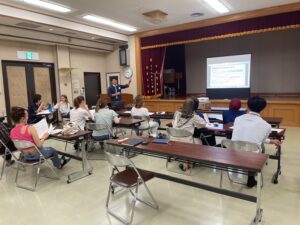
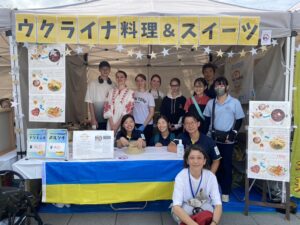
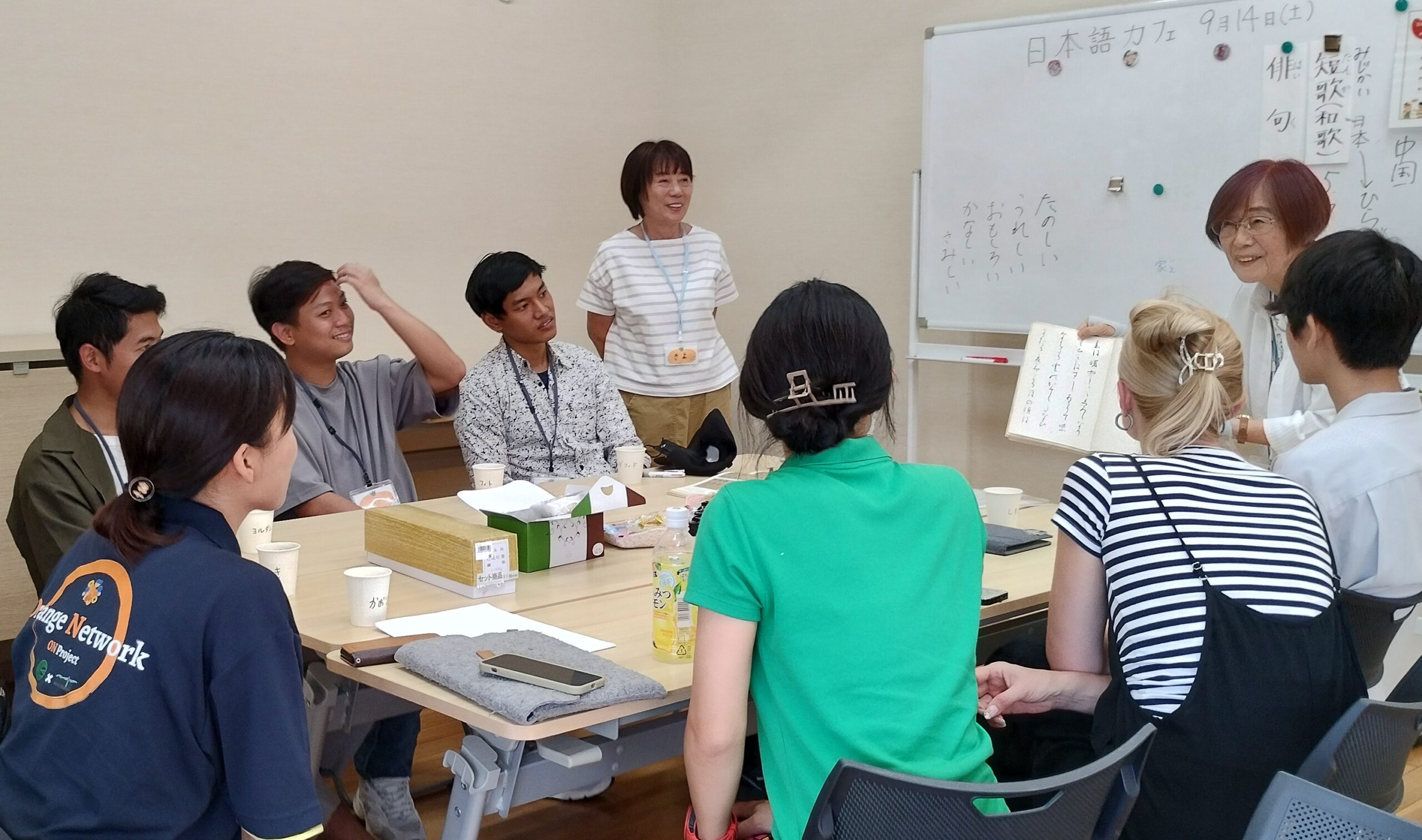
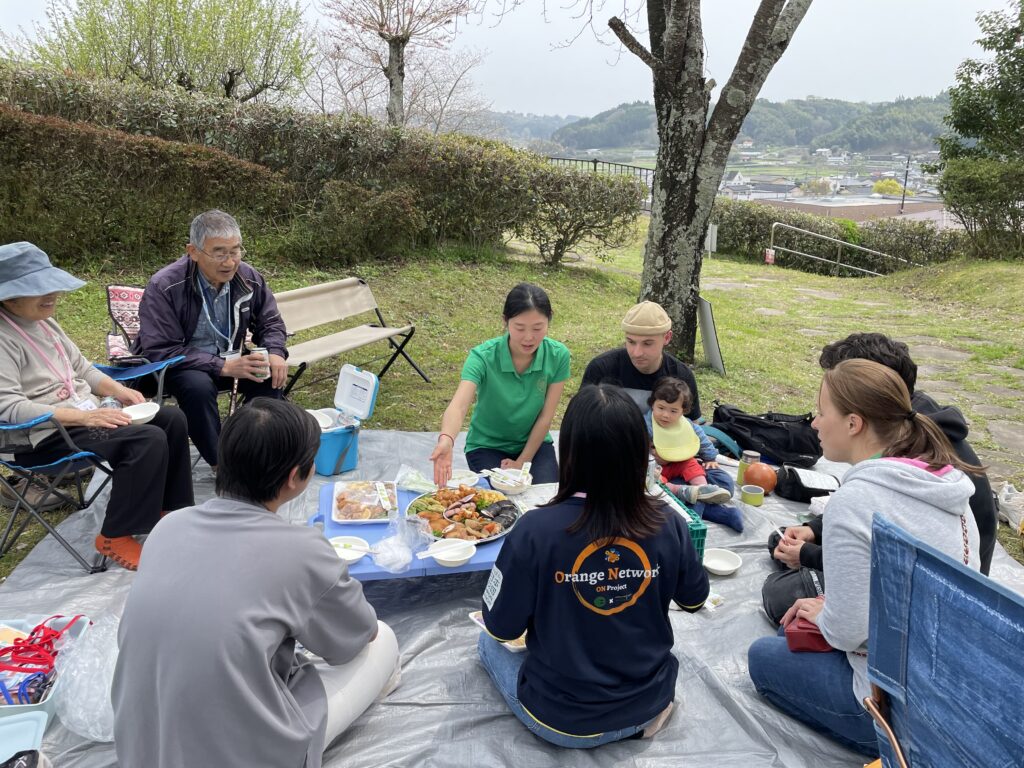
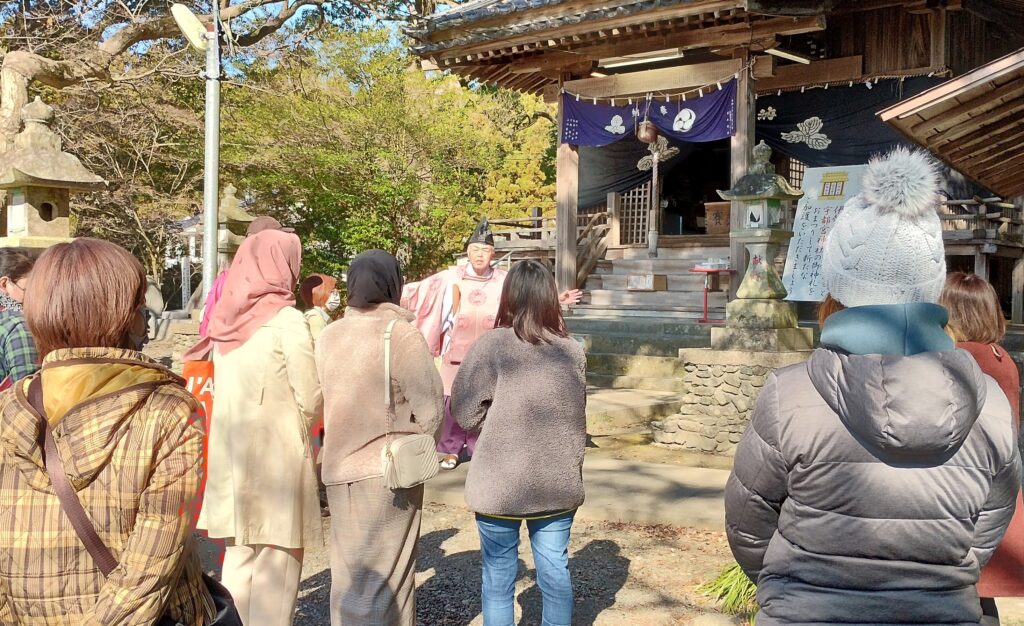
Since July 2023, Gyokuto Town has offered two programs running twice a month (on Tuesdays and Saturdays): the Nihongo Cafe, where foreign residents connect with local volunteer supporters and explore Japanese culture, customs, disaster preparedness, and everyday language through conversation; and the Japanese Language Class, held several times a year to help participants prepare for the Japanese Language Proficiency Test (JLPT) by studying grammar and kanji. Several times a year, cultural events such as New Year shrine visits, cherry blossom viewing, and hiking are also held, giving foreign residents hands-on opportunities to experience Japanese culture.
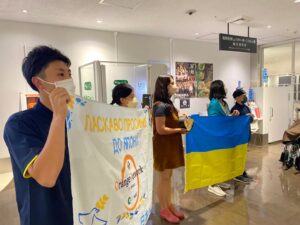
The Nihongo Cafe is run by members of the Orange Network Project (ONP) — which began as a Ukrainian evacuee support initiative — along with staff from Gyokuto Town Hall and GOJOplus. Two of the members hold official Japanese language teaching qualifications.
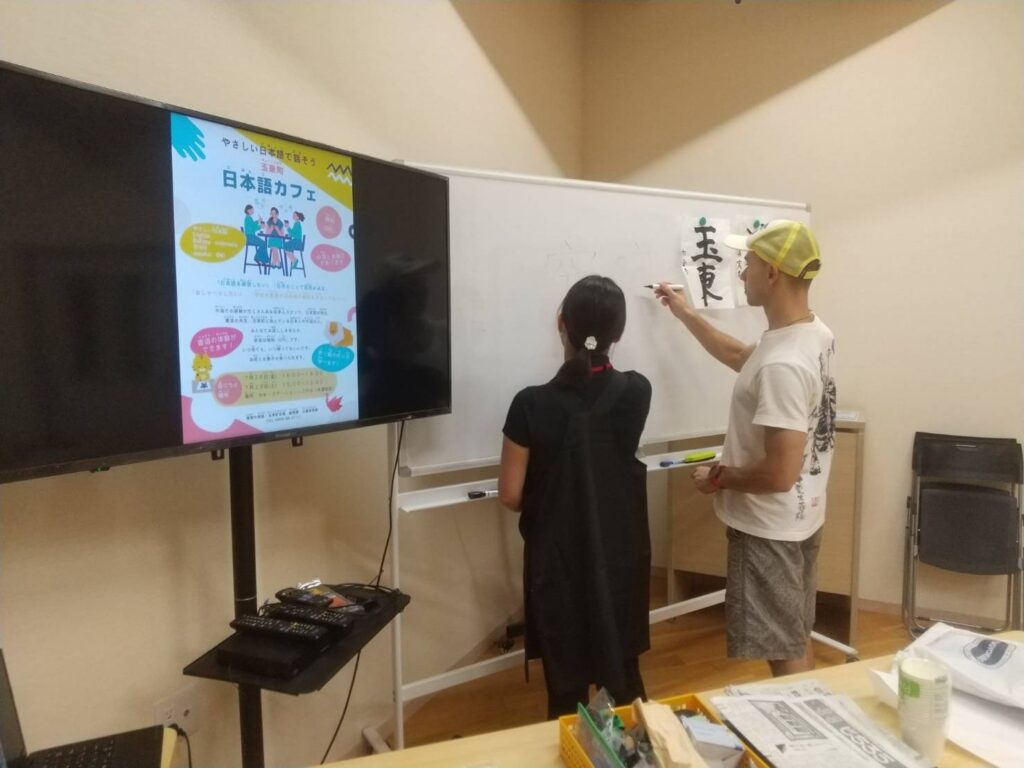
Training Nihongo Cafe Supporters
Japanese language education in Gyokuto Town began in August 2022, when the town welcomed its first Ukrainian evacuees. Since Japanese was essential for daily life, the program started with small-group lessons taught by a hired Japanese language instructor.
In July 2023, the Nihongo Cafe launched — led primarily by ONP members — with the goal of giving foreign residents more opportunities to understand Japanese culture and connect with local people. As residents from other countries, including Indonesia, began joining, the team began thinking about how to expand support to them as well. Recognizing that true multicultural coexistence comes from building connections not just between support staff and foreign residents, but between foreign residents and the broader community, the team held a public information session to recruit and train local volunteers as Nihongo Cafe Supporters.
Those who applied took part in a four-day training course covering cross-cultural understanding, plain Japanese (yasashii nihongo), and observation sessions at the cafe. Over 2023 and 2024, more than 20 people completed the training — including a member who was in sixth grade at the time — and several are now active, enthusiastic participants at every session.
Many people were drawn to the program after the Ukrainian evacuee program sparked their curiosity about foreign residents living nearby, and came wanting to hear their stories directly. Seeing everyone laughing and chatting over tea and snacks is a joy for us too.
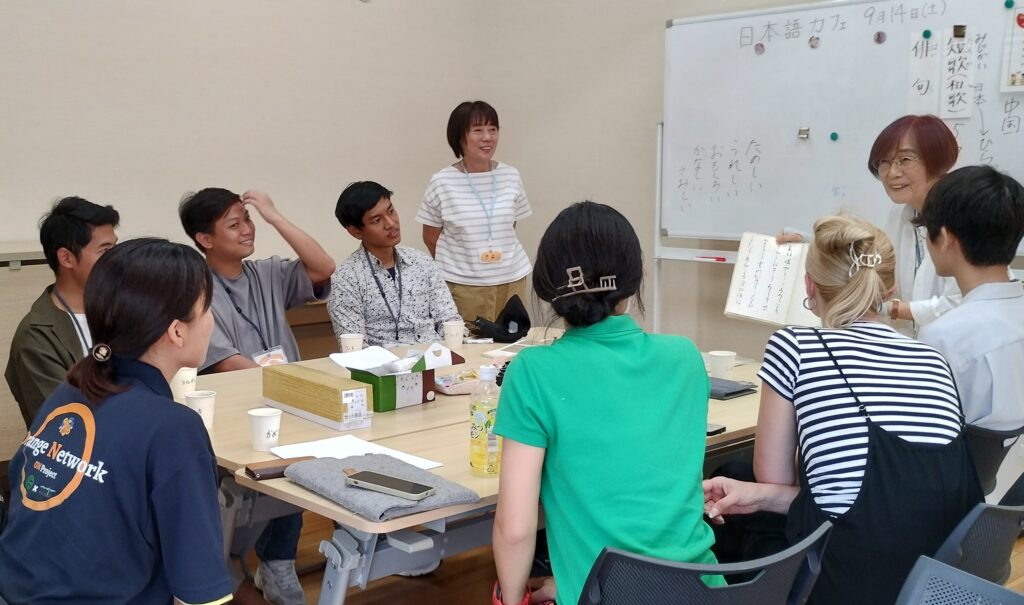
What It Means to Learn Japanese
Japanese is an extraordinarily complex language. Hiragana alone has 46 characters, followed by voiced and semi-voiced sounds, contracted sounds (yōon), the small tsu (っ), katakana, and then anywhere from 2,000 to 3,000 kanji — some of which even native Japanese speakers can’t read. It’s entirely understandable that learners find this daunting. Generally speaking, it’s said to take around six months to reach a functional level of Japanese — though of course this varies greatly from person to person.
The reasons people are learning Japanese differ enormously. Some, like certain Ukrainian evacuees, are encountering Japanese for the very first time and simply want to manage daily life. Others studied Japanese in their home countries out of genuine interest and have come to Japan aiming to build a career. And for some, religious or dietary restrictions mean that without being able to read Japanese, even grocery shopping becomes a challenge. “I want to learn Japanese” can mean so many different things.
For technical intern trainees working full-time, finding the time and energy to study is often a real struggle. Since many workplaces require JLPT N2 or above for long-term employment in Japan, we believe there will continue to be a need for JLPT-focused classes going forward.
In recent years, even in rural communities, the trend toward nuclear families has weakened the fabric of local connection. In Gyokuto Town too, community events have become less frequent and the opportunities to connect with neighbors have decreased. In this context, we hope the Nihongo Cafe can grow into a new kind of gathering place for the community.
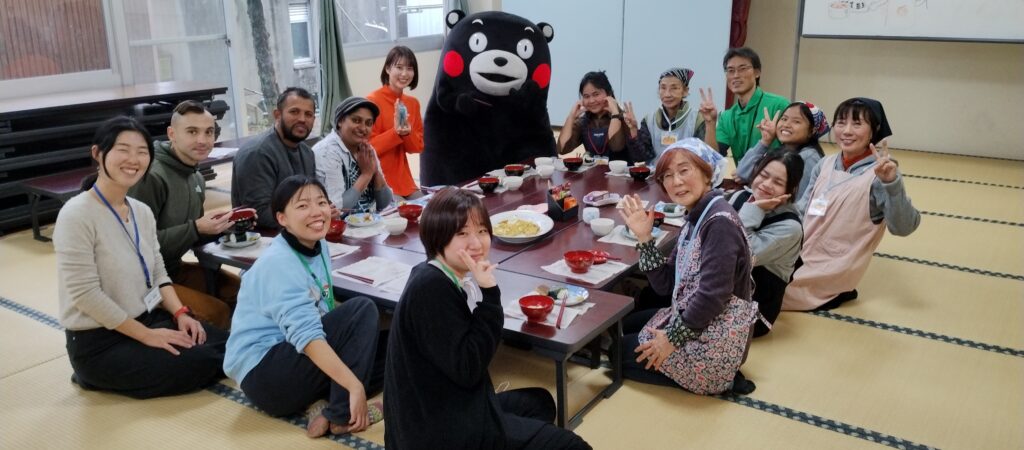
Growing Into a Community Language Cafe
What we always keep in mind at the Nihongo Cafe is that this is not a formal study environment. We want people to come like they’re visiting a friend — to unwind after work, to simply enjoy themselves. And that spirit works: genuine curiosity about each other naturally sparks real conversation, and real bonds form between participants and local residents. At the events we’ve hosted, participants often invite friends and acquaintances from Kumamoto City and other areas, and attendance has sometimes exceeded 20 people.
Going forward, we hope to develop the cafe and its events into a space that is open to all of Gyokuto’s approximately 5,200 residents — a place where anyone can casually connect with people from other countries. We want to create connections that cross nationalities, cultures, and generations, ultimately deepening multicultural coexistence in the community. Our goal is a community where people understand and respect one another — not as “foreigners” and “Japanese,” but simply as fellow residents of Gyokuto Town.
Voice of a Nihongo Cafe Supporter
I first heard about the Nihongo Cafe Supporter training program through the town’s community newsletter. I already knew about the Ukrainian evacuee program and had been wanting to talk with the evacuees directly, so even though it took a bit of courage, I decided to sign up for the training and become a supporter. At the beginning, I made a point of attending every single session so people could get to know my face and name. That became a habit, and I genuinely enjoy the conversations — so I still never miss a session. Many of the participants are living away from their families, so I hope to become something like a grandmother figure here in Japan — someone they can come to with anything when they’re in need.
Before I became a supporter, I had no idea how many foreign nationals from countries other than Ukraine were living in our town. They work in care homes and all kinds of places — they’re not just people we support, they’re people who support us too. There are plenty of residents in town who know these people exist but don’t know how to approach them or what to say. Through the Nihongo Cafe, I hope more people in the community will take the chance to really get to know them.
Voice of a Nihongo Cafe Participant
I came to Japan as a technical intern trainee in 2022. After a month of Japanese language study in Ibaraki Prefecture, I moved to Gyokuto Town, where I now work as a machine operator and in machine assembly. I had been wanting to learn more Japanese and experience Japanese culture when the town hall sent me information about the Nihongo Cafe, so I decided to join. Everyone here is so kind, and I can feel my Japanese improving — it makes me really happy. I also love taking part in the cultural events; this year I visited a shrine for the first time on New Year’s Day. I want to keep experiencing new things and get to the point where I can really connect with the people of this town.
Article by: GOJOplus