Welcoming Ukrainian Evacuees and the Path Toward Multicultural Coexistence
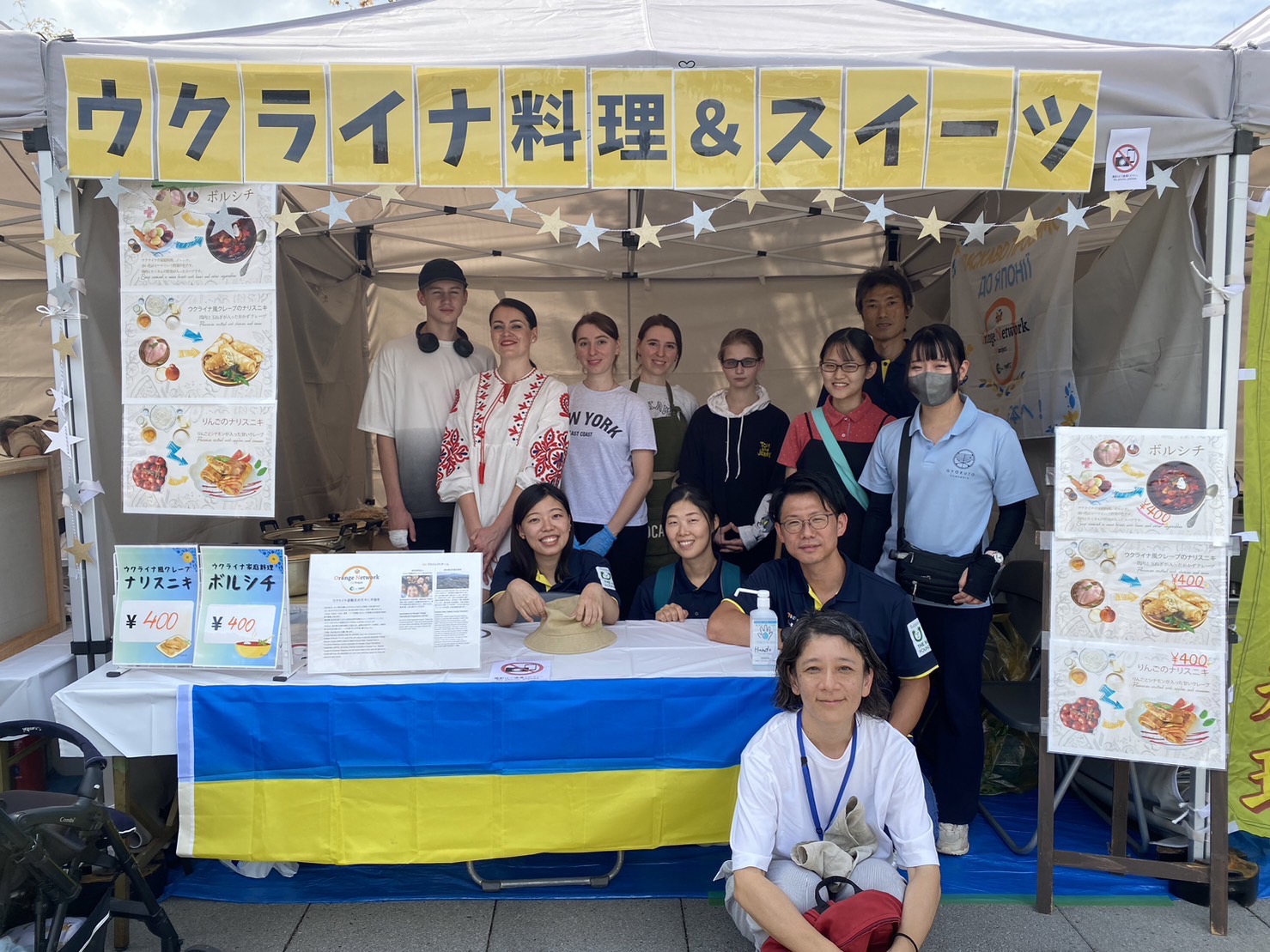
Supporting Ukrainian Evacuees
Following Russia’s invasion of Ukraine in February 2022, the Japanese government announced measures in April 2022 to accept evacuees and support their lives in Japan. As of January 31, 2025, Japan has welcomed a total of 2,747 Ukrainian evacuees.
Gyokuto Town (Gyokutou-machi), located in Tamana-gun, Kumamoto Prefecture, is one of the municipalities that has taken part in this effort.
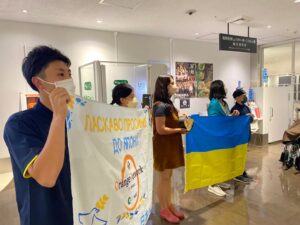
With support from The Nippon Foundation, GOJOplus launched the Orange Network Project (ONP) in partnership with Gyokuto Town Hall — a program dedicated to supporting Ukrainian evacuees. Beginning in August 2022, the town welcomed a total of 17 evacuees from 6 households.
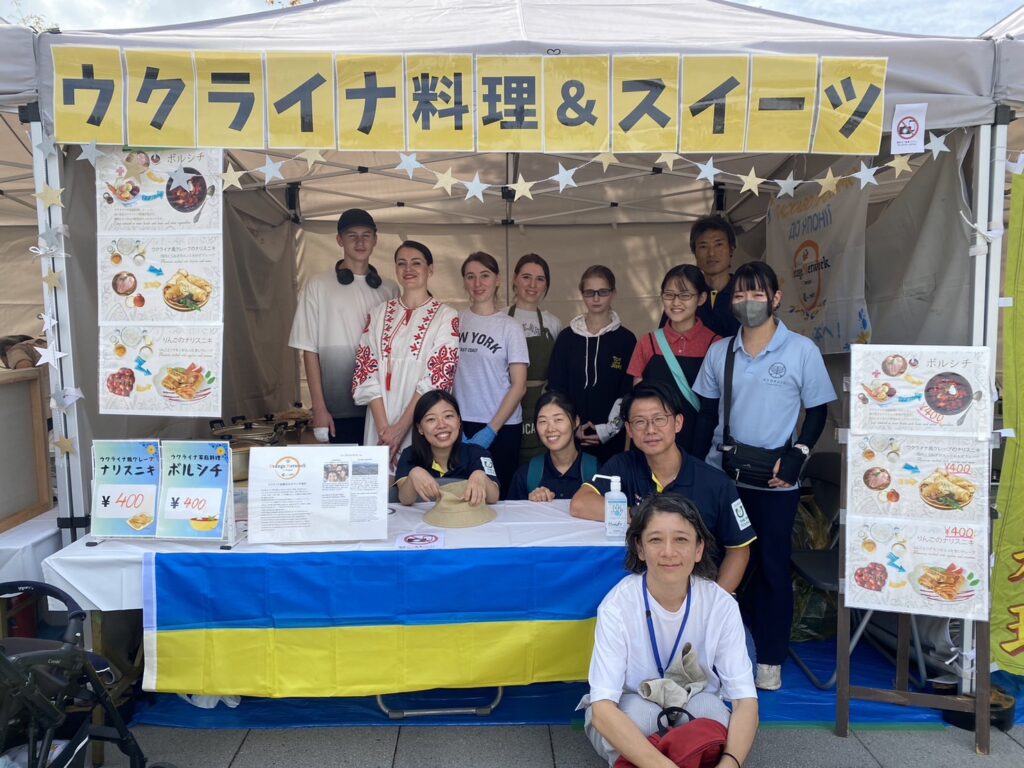
To facilitate the intake process, ONP published an application form on its official website in three languages — Japanese, Ukrainian, and Russian — and conducted two interviews with each applying household. Unlike Tokyo or Osaka, Gyokuto is a quiet, nature-rich rural town, and the interviews were designed to ensure there would be no mismatch after arrival: checking whether applicants’ image of Japan aligned with life in Gyokuto, and confirming their willingness to learn Japanese.
Working closely with the town hall to provide comprehensive support, the program has seen all households remain in Gyokuto for over a year.
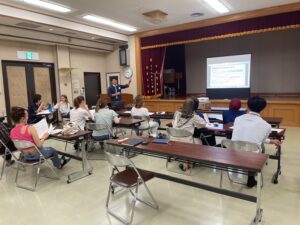
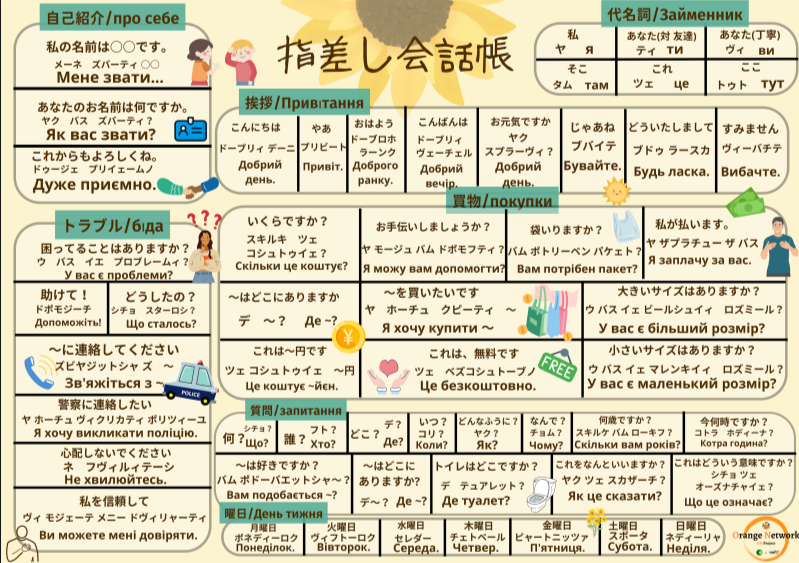
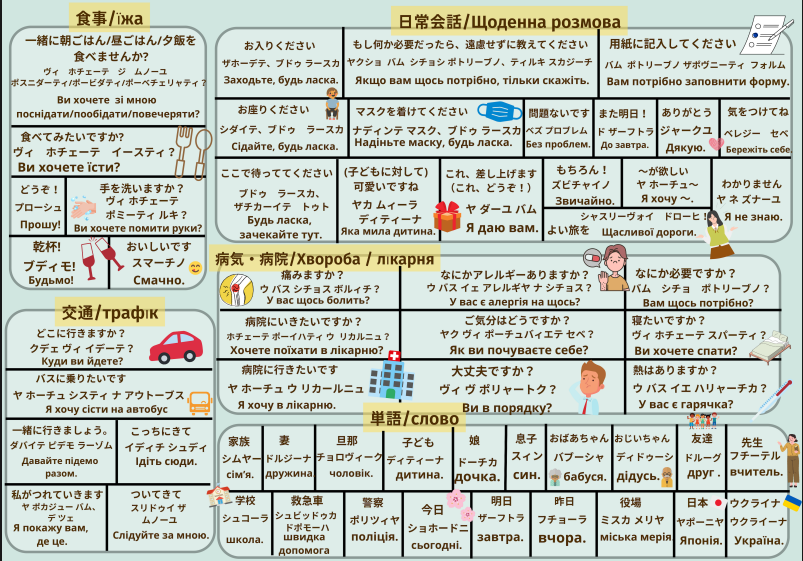
Believing that coexistence is only possible with the understanding and cooperation of the local community, ONP held informational sessions for local residents when the evacuees arrived, and distributed conversation booklets that allowed town residents and evacuees to communicate by pointing at pictures and words.
In the early stages, the focus was on ensuring evacuees could live safely and comfortably. As it became clear that the evacuation would be a long-term situation, the team also developed a support plan aimed at helping evacuees become self-sufficient — living as members of the local community rather than depending on ongoing assistance. This plan included Japanese language education, support for employment and schooling, cross-cultural understanding, and multicultural coexistence initiatives. As a result, most households have now acquired the Japanese skills needed for daily life and work, and are living with growing independence.
Expanding Support to Foreign Residents
About a year after the Ukrainian evacuees arrived, town hall staff held a two-day follow-up orientation covering topics such as taxes, health insurance, Japan’s education system, and disaster preparedness. The sessions made use of yasashii nihongo (plain Japanese), English, and Ukrainian translations to help participants understand the content.
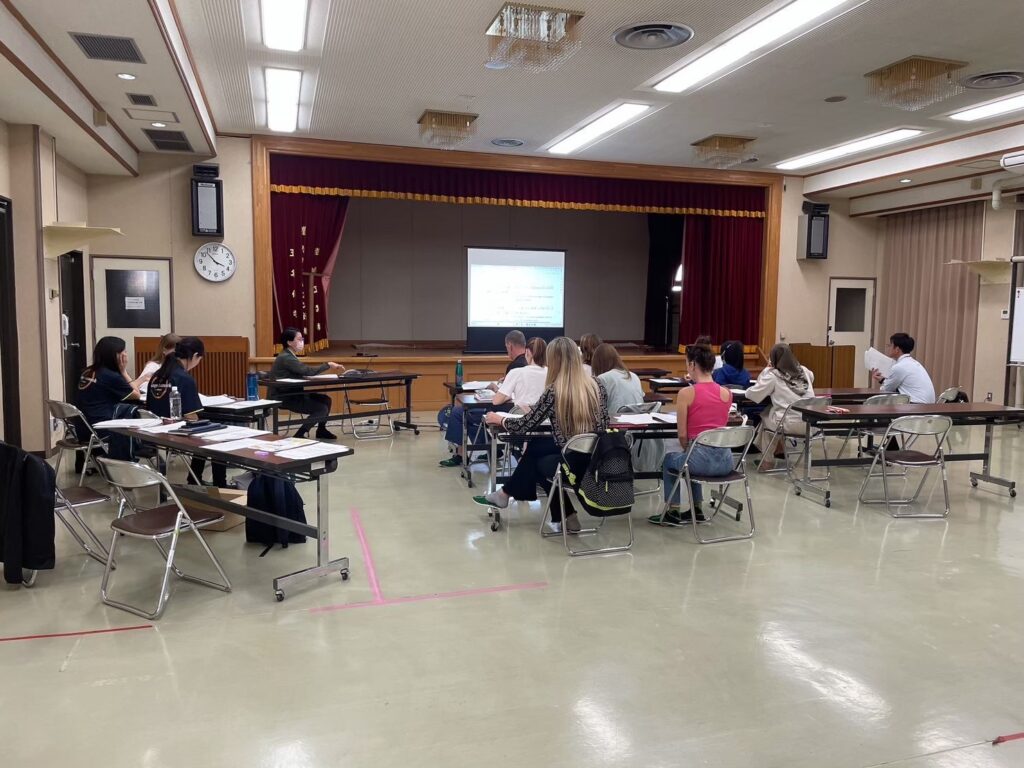
When the orientation was opened to other foreign residents in the area, a number of technical intern trainees and others showed up wanting to learn about taxes, insurance, and residency status — making it clear that support needed to be expanded beyond the Ukrainian community.
In response, GOJOplus opened a Foreign Resident Help Desk in October 2024, open to all foreign residents and anyone connected to them. The desk aims to connect foreign residents facing difficulties with the right support, offering individual consultations on topics including schooling and employment, as well as creating materials to help people understand Japanese systems and culture and access social services on their own.
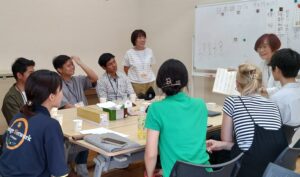
To foster coexistence between local and foreign residents, GOJOplus also runs programs for town residents, including plain Japanese workshops and cross-cultural understanding courses. In addition, multicultural coexistence classes have been held at local elementary and junior high schools, where foreign residents introduce their home countries’ lifestyles and food through lessons and cooking sessions — creating opportunities for local residents to learn about and connect with their foreign neighbors.
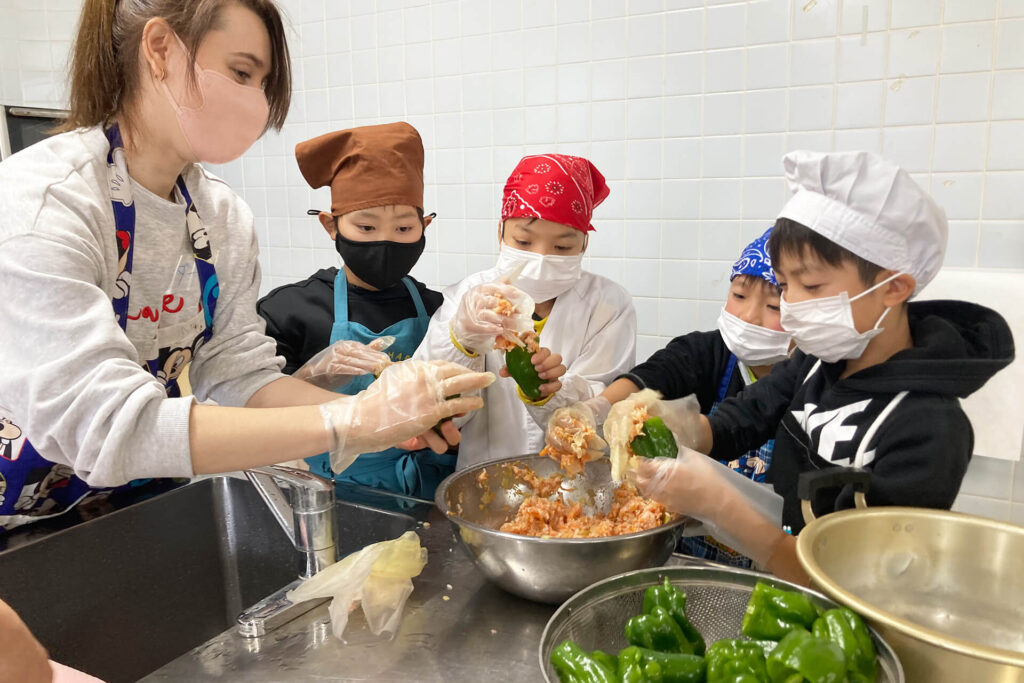
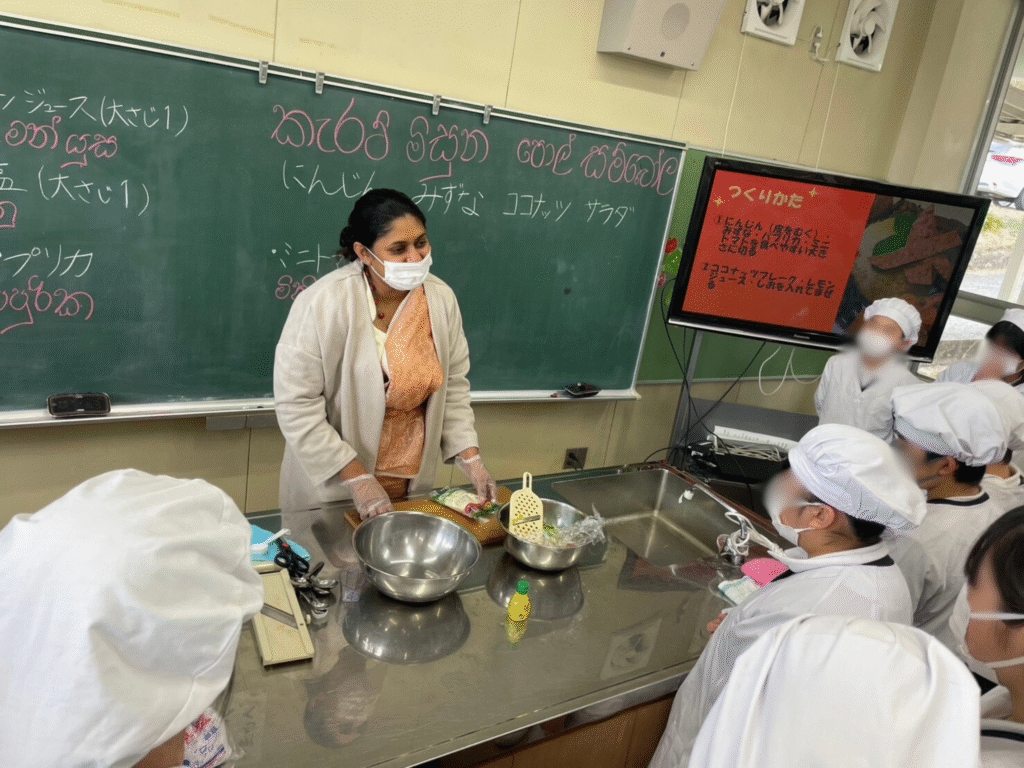
The Nihongo Cafe, held regularly since July 2023, covers many aspects of Japanese culture and customs, giving foreign residents a chance to learn the everyday Japanese they need for life in the community while discovering more about Japan and their local town. Several times a year, cultural experience events are also held — such as New Year shrine visits and cherry blossom viewing — giving participants hands-on encounters with Japanese culture.
Creating the Handbook for Welcoming Foreign Residents
apan has had very little experience as a nation in welcoming refugees on a significant scale, and when this project began, the team was largely feeling its way forward. Questions like how to bring people to Japan, and how to handle Japanese language education, employment, and schooling after arrival were worked through step by step — creating to-do lists with town hall staff and reaching out to municipalities and organizations that had already gone through the process to gather information.
Hoping that the know-how gained through this project could benefit others, GOJOplus created the Handbook for Welcoming Foreign Residents. The response has been encouraging — many municipalities and NPOs have reached out, and the handbook is gradually making its way into wider use.
(Learn more about the Handbook for Welcoming Foreign Residents)
Ukrainian Evacuees and the Future of Multicultural Coexistence
About two and a half years since the first evacuees arrived, all households are now employed in Japan, and how they are perceived has shifted — from “Ukrainian evacuees” to “foreign residents living in the community.” We increasingly find ourselves recognizing that it’s not a one-way relationship where we and the townspeople support them; through everyday life and work, we are genuinely helping each other as good friends and neighbors.
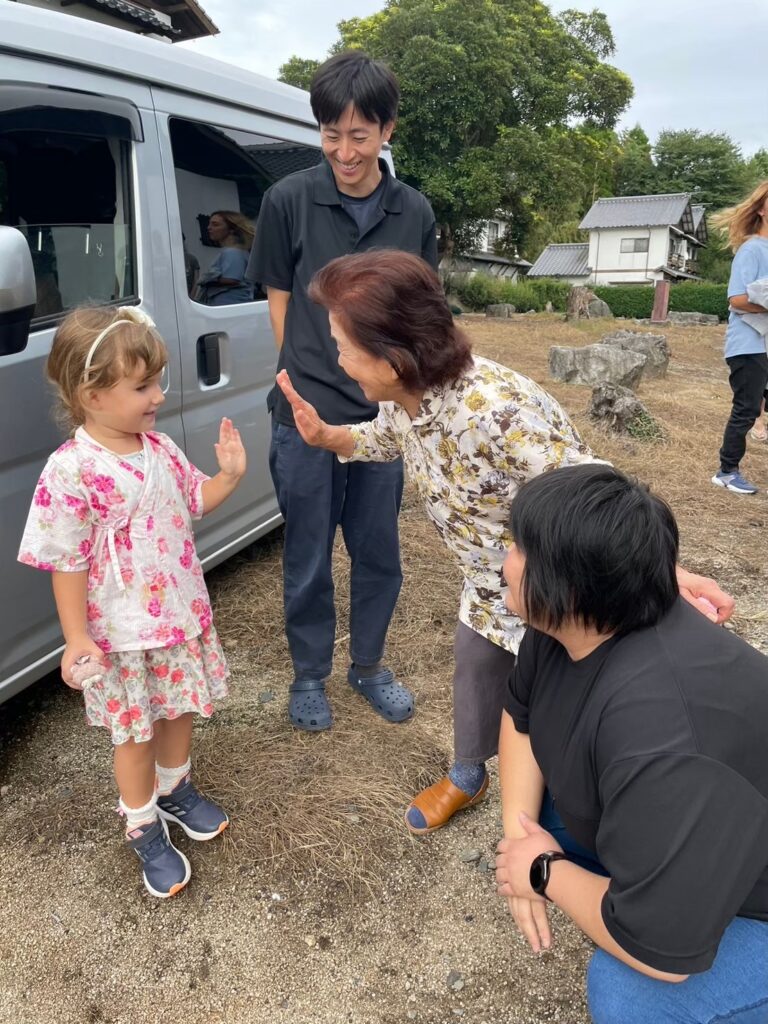
One moment that brought this home was when we helped a family move out in October 2024, as they returned to Ukraine. The house was full of furniture and toys donated by local residents — a testament to how loved this family had become. A four-year-old Ukrainian girl in the family said in clear Japanese, “When I grow up, I want to come back to Japan to see my nursery school teacher and my friends.” Words of hope for reunion and peace in Ukraine were shared by evacuees and local residents alike — a reminder of the bonds of mutual aid that can only grow in a small, close-knit community.
The Nippon Foundation’s financial support for Ukrainian evacuees ends after three years in Japan, meaning that living support funding will run out within this fiscal year.
Yet many evacuees still face challenges navigating Japanese systems — taxes, insurance, their children’s education — and ongoing support remains essential. We will continue to use the Foreign Resident Help Desk, the Nihongo Cafe, and other existing structures to support foreign residents living in the community.
We are also continuing to hold cross-cultural understanding courses for local residents, raising awareness about the foreign nationals living in their town and about yasashii nihongo as a tool for easy communication — so that both town residents and foreign nationals can enjoy a life where they feel truly at home alongside one another.
The circle of multicultural coexistence that began with Ukrainian evacuee support is slowly but steadily growing — and we are committed to keeping that momentum going.